Mark Cocker
Finding Wonder in the Living World
Books really do furnish a Christmas

I get notice of, or receive, too many books to give due love to them all. As the holiday season approaches and we get to have leisure time for reading, I thought I’d post about some books you might want to mention to Santa. I haven’t read every one of them but, as my great late friend Tony Hare used to say, ‘I always judge a book by its cover’.
They are in no particular order:

- Ian Collins, Blythe Spirit: The Remarkable Life of Ronald Blythe, John Murrray £25, 404pp. The author, long-term friend and confidante of Ronald Blythe, has written the official biography. Affectionate, revelatory and wonderfully detailed, it describes the extraordinary life of the patron saint of English nature. It takes us from his impoverished country background (think of John Clare but in the 1930s) to his emergence as a key literary figure of 20th-century England. Blythe became friend to and collaborator with, or colleague of John, Christine and Paul Nash, Benjamin Britten, E M Forster, Richard Mabey, Julia Blackburn, Patricia Highsmith among many others. For those in Suffolk and Derbyshire I am interviewing Ian about the book on 1 June 2025 at Shimpling Park Farm and when he comes to the Buxton Festival on 24 July 2025. Dates for the diary!
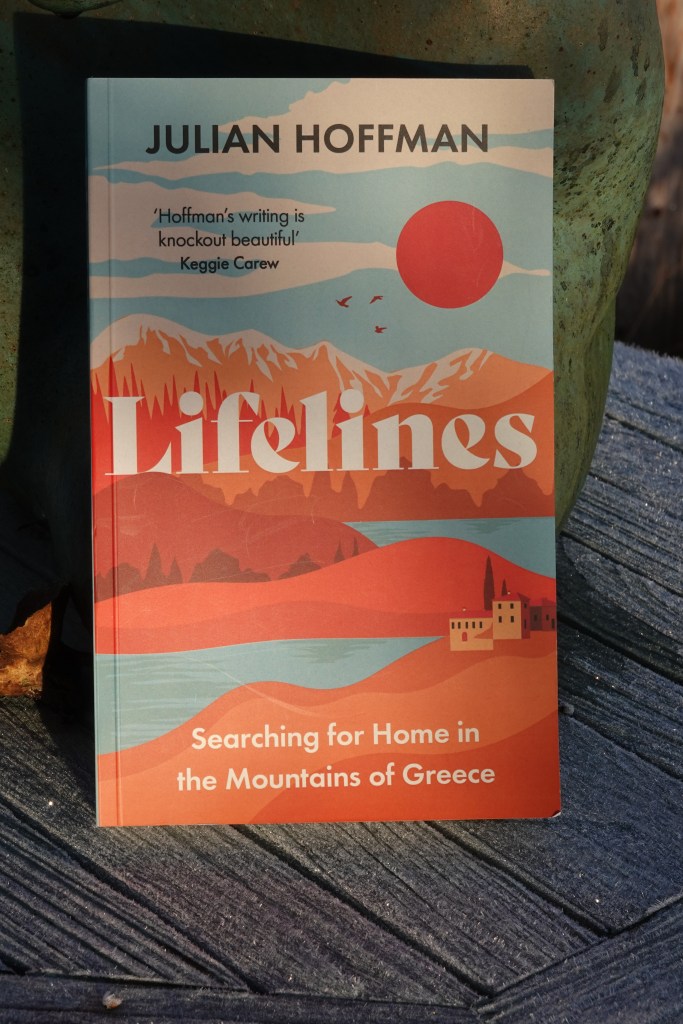
2. Julian Hoffman, Lifelines: Searching for Home in the Mountains of Greece, Elliott & Thompson, £18.99, 298 pp. It comes out in May 2025 and promises to be one of the nature books of the year, judging from Julian’s last book Irreplaceable. He writes exceptionally well and has plumbed his theme for half a lifetime. He introduced Maria and me to his adopted homeland – around the Prespa lakes, where Greece meets Northern Macedonia and Albania. His love and depth of knowledge of the region transformed it into one of our favourite Mediterranean places. I couldn’t recommend his work more highly.

3. David Perkins Hairy-foot, Long-tongue: Solitary Bees, biodiversity, evolution in your backyard, Whittles Publishing, £18, 187pp. The author’s ability to capture extraordinary forensic detail about the bees he has observed in the field or down his microscope is truly astonishing. The resulting drawings and paintings are worthy of Leonardo. To see and to be able copy what you see is at the heart of Perkins’ achievement. I reviewed the book for Country Life and wrote: ‘[It] is easily the best primer on the [bee] family that I have encountered.’ I love bees all the more because of it.
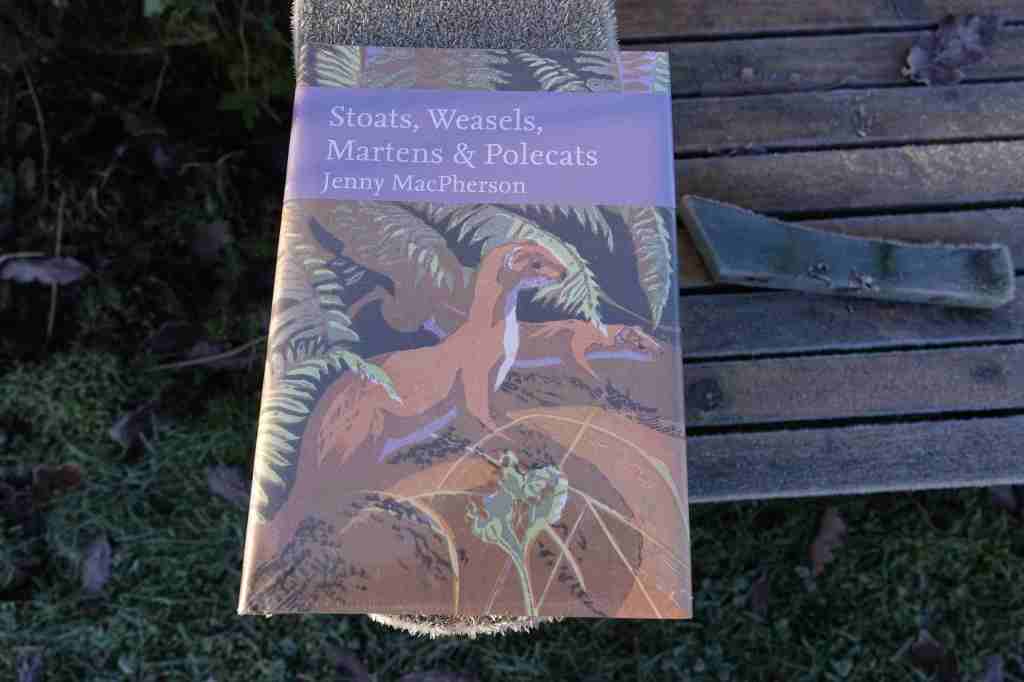
4. Jenny MacPherson, Stoats, Weasels, Martens and Polecats, Collins, £65, 372pp. The New Naturalist series, in which this is volume 149, has hit new highs in terms of quality. This looks a humdinger. I recently reviewed two of the series released earlier in 2024, which you can read here. MacPherson has brought the rapidly moving story – given the massive spread of pine martens in Scotland and now releases in Cumbria and elsewhere – bang up to date, while covering all the latest research on the group.

5. Princeton University Press recently started a ‘Little Book Of …’ series. Here are four – Fungi, Whales, Weather and Dinosaurs (NB there are also butterflies, beetles, spiders and trees). £12.99 a pop. Those of you of sufficient vintage can imagine the Observers’ series to get a sense of size and length (c150 pp). However the content is very different. Rather than offering, as the Observers’ did, a rather inadequate one-page-a-species account of about 100 organisms, Princeton give you a digested account of the whole subject. Written by experts but couched in highly accessible terms, they promise to be a great way of introducing yourself to new subjects. And they could be perfect for children.
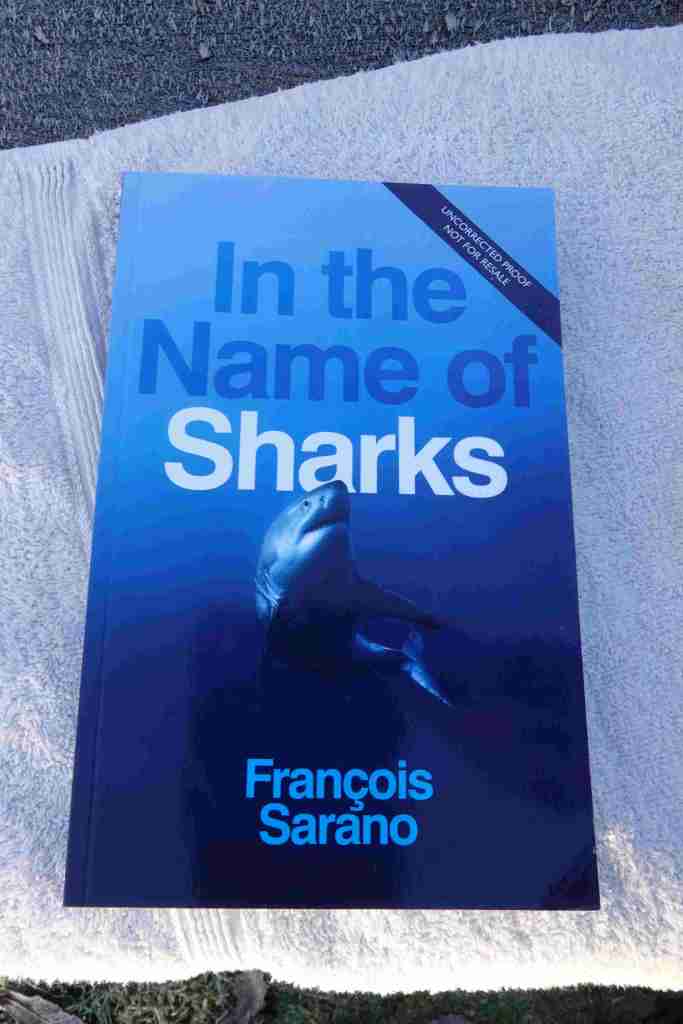
6. Francois Sarano, In The Name of Sharks, Polity, £15.95 260pp, Sarrano is a former expedition leader on Cousteau’s research ship Calypso and has a lifetime’s experience of diving and firsthand encounters with sharks. He takes us through the science but also offers us a deeply felt personal defence of some of the world’s most remarkable animals. After reading this transformative book you might not want to get back in the water, but not because of the Spielberg-like nightmare, but because you will conclude that our world, with its seas and coastal shore – belongs to more than just the surfboard and jet-ski.

7. Richard Fortey, Close Encounters of the Fungal Kind: In Pursuit of Remarkable Mushrooms,, William Collins, £25, 328 pp. Fortey is best known as a paleonotologist and also as the unofficial biographer of all life on Earth. But the author began his journey towards Nature as a teenage mycologist. He explores this first love and trawls the weirdness of funga, as well as their place at the heart of all terrestrial life, while also debunking some of the more popular ‘ideas/myths’ that now engulf our understanding of myccorhizal relationships between flora and funga. Full of poetry, full of the extraordinariness of life, full of the author’s sense of wonder at it all – it is vintage Fortey (what his old headmaster called ‘Fortey’s forte!’) And please note that Richard’s book is propped up against one of his friends in our garden, hairy curtain crust!
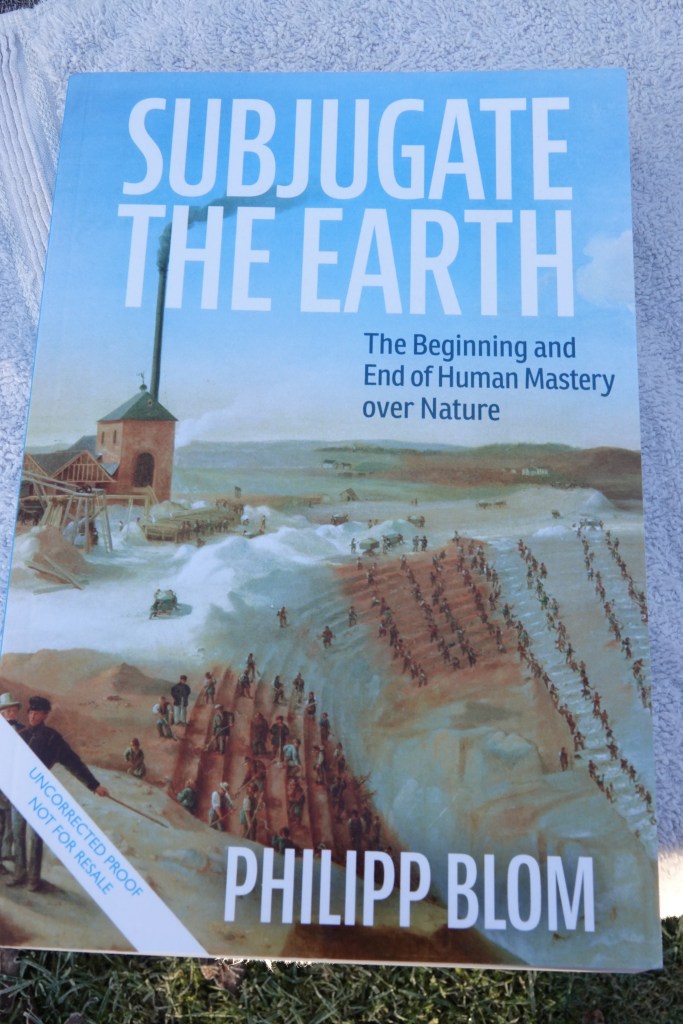
8. If you need meat a little stronger for Xmas than veggie roast, here is historian Phillipp Blom’s Subjugate the Earth: The Beginning and End of Human Mastery over Nature, Polity Nov 2024, £25, 286 pp. Blom takes us through the materialist attitudes and philosophies, culminating in global capitalism, that have made of the whole living planet nothing but an instrument for our purposes. This a customary pro-Nature text with this key difference. He argues that the whole structure of our society is implicated. It is a great single-volume introduction to the biggest issues of our time.
 Mark Cocker